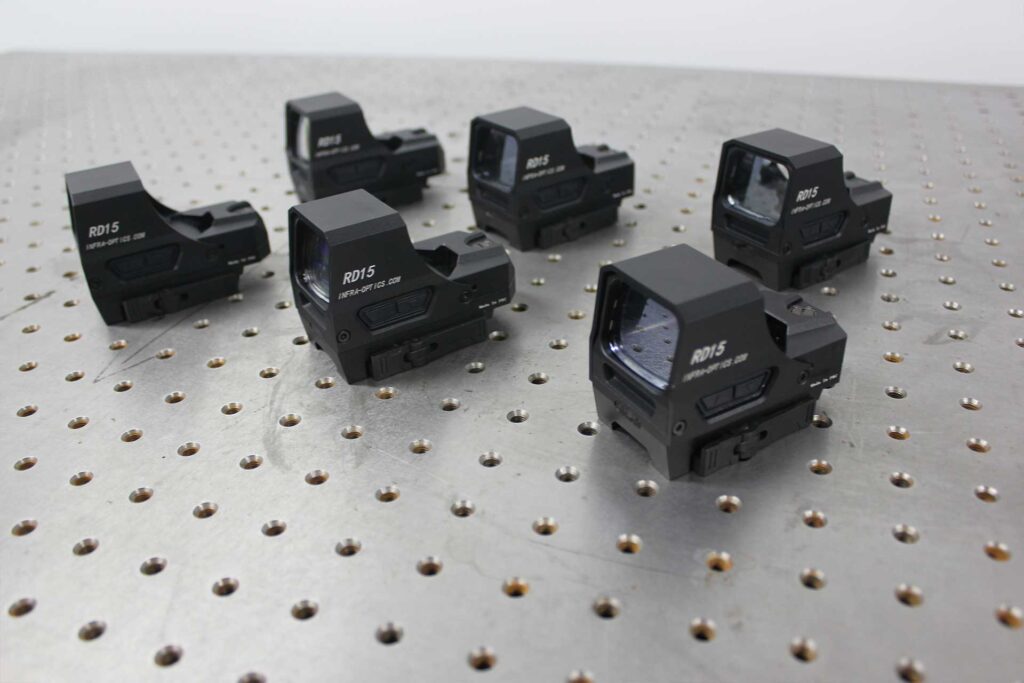

True Shot Value Is the Key for a Thermal Scope to Hold Zero in Recoil Tests and Real Shots

Among all firearm-mounted electronic devices, recoil is the single greatest external factor affecting product lifespan and aiming precision. For a thermal riflescope, shock resistance is particularly critical. Designers and engineers optimize every component—the housing, internal brackets, germanium lens protection, and detector packaging—to ensure accuracy and reliability across various firearm platforms. The culmination of all these efforts is our impact resistance testing.


At Novelty Point Optics, we go beyond assigning a simple impact force value to our products. We employ a more scientific and precise approach: testing by fully simulating real firearm recoil.


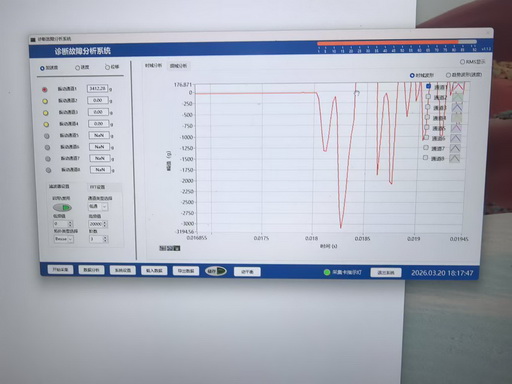
Due to China’s strict firearm regulations, conducting live-fire tests locally is challenging. To overcome this, our General Manager, Mr. Harry, has traveled multiple times annually to the United States since 2024 to conduct live-fire testing on mainstream rifle platforms. During these sessions, he uses vibration sensors to capture complete recoil data—not just peak G-force, but the full waveform, including amplitude, duration, and temporal characteristics of the recoil event.


These valuable datasets are brought back to China to calibrate our custom-built vibration test rigs. By accurately reproducing the recoil waveforms captured in the field, we can validate the durability of our thermal scopes, red dot sights, and external battery packs under realistic conditions.


We believe superior products emerge from meticulous attention to every detail. From waterproofing to shock absorption, from material selection to structural design, NPO’s relentless optimization across all dimensions ensures that whether in the field, on a mission, or on patrol, our thermal imaging scopes deliver the confidence and reliability shooters demand. Because true reliability isn’t a single number from a lab—it’s holding zero, shot after shot, against the full force of real recoil.
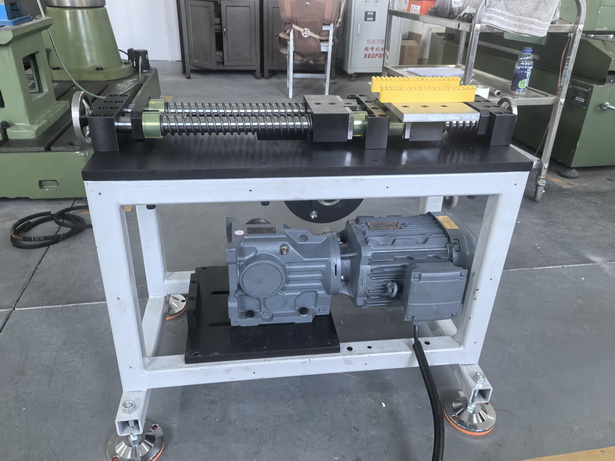
recoil test platform
_cuva
full shock wave diagram

The reason why NPO Insists on Third-Party IP68 certification

Modern firearms and optics are undergoing a profound transformation—becoming more electronic, networked, and intelligent. An increasing number of devices are now integrated onto rifle platforms, forming comprehensive, powerful systems. These typically include:


• Thermal scopes
• Digital night vision scopes
• Red dot sights
• Ballistic computers
• Weapon lights
• Laser aiming modules
• External power supplies


Unlike traditional optical sights, these electronic devices must withstand more than just vibration and extreme temperatures. They face an even tougher challenge: IP68 ingress protection rating.


What is IP68? IP68 stands for “Ingress Protection 68,” a standard established by the International Electrotechnical Commission (IEC). The two digits signify:


• First Digit (Dust Protection, 0-6): 6 is the highest level, meaning totally dust-tight. Dust cannot enter the device or affect its operation.
• Second Digit (Water Protection, 0-9): 8 is among the highest common ratings for consumer electronics, meaning the device can be continuously submerged in over 1 meter of water without damage.

In simple terms, IP68 means: Dust cannot enter; water cannot penetrate.

At Novelty Point Optics, every electronic device we manufacture—whether it’s a thermal riflescope, a red dot sight, or the EPS-A1 external power supply—undergoes rigorous IP68 testing. But our approach differs from many others. In China, numerous manufacturers use in-house testing platforms to conduct their own experiments, then simply declare their products IP68 compliant. We do not take this path. We choose a more difficult—but far more trustworthy—route: We submit all our products to renowned third-party testing laboratories. Independent professionals conduct the tests and issue official certification reports. Why?


Because IP68 is not a slogan; it’s a promise. When users take our thermal imaging scopes through rainstorms, across streams, or into damp forests for hours, they need absolute confidence that precision electric board inside remain untouched by moisture, and that critical electronic components won’t fail due to dust. That confidence cannot come from us alone—it must come from an objective, just and authoritative third party.

Reliability is not an ideal laboratory data point; it’s the real-world experience of users in combat zones, hunting fields, and combat scenes. Every NPO device not only passes multiple internal inspections but also carries an IP68 certification from an independent third party. This is our written commitment to customers and our redefinition of “Made in China” quality.


From oxidation protection for infrared detectors, to optical stability at -40°C, to today’s third-party IP68 certification—in places visible and invisible, NPO constantly asks the same question: How can we give users absolute confidence in our products under extreme conditions? The answer lies in these seemingly “excessive” commitments.

How Novelty Point Optics Fights Electronic Oxidation with Vacuum Nitrogen Filling

Modern hunting sights have fully entered the electronic age. From thermal scopes to red dot sights, the precision electrical components are packed into compact housings. The stability of these components directly determines the accuracy and reliability of your optic.


Unlike traditional optical sights, electronic aiming systems rely on circuit boards, sensors, and processing chips—components rich in metals like copper and tin. These semiconductor materials are not inert like glass; they are constantly under attack from oxygen and moisture in the air. Component oxidation is the silent killer that accelerates performance degradation and shortens the lifespan of modern thermal imaging scopes and red dot sights.


From my first day in this industry four years ago, one of my most critical missions has been fighting an invisible enemy: humidity and air. Protecting precision electric boards, sensors, and processing chips—slowing their oxidation—is essential to ensuring every NPO product performs reliably in demanding hunting environments.


At Novelty Point Optics, we’ve developed a comprehensive system to combat electronic oxidation. Our most powerful weapon is the vacuum nitrogen filling machine, which is an “Inert Shield” for Your Optics.

This process is the final step before every NPO product leaves our facility—and it’s perhaps the most telling example of our commitment to quality. Here’s how it works:

Preparation: The small vent screw on the product’s base is opened.


Vacuum & Drying: Units are inverted and placed in the vacuum chamber tray. The door seals, and the vacuum cycle begins, extracting all air from the chamber and from inside every optic. Simultaneously, the chamber automatically heats to 65°C/145°F, drying each unit and removing all residual moisture.


Nitrogen Infusion: Once target vacuum pressure, temperature, and time are reached, the system opens a solenoid valve, flooding the chamber and every optic with high-purity nitrogen.


Permanent Sealing: The chamber opens. Because pure nitrogen is heavier than air, it remains inside the inverted optics. We quickly seal the vent hole with a special srew and apply silicone for secondary protection, locking the nitrogen inside permanently.

This process creates an inert gas environment for the precision electric components inside every NPO thermal riflescope and red dot sight. Deprived of oxygen and moisture, oxidation is dramatically slowed, extending product lifespan and enhancing resistance to harsh environments.


Behind the high performance you see is Novelty Point Optics’ unwavering commitment to our customers—a humble pursuing of product quality achieved through complex, rigorous processes. Vacuum nitrogen filling is just one of our “invisible efforts,” but it protects something vital: your absolute confidence with every trigger pull in the dark.

nitrogen filling for red dot sight
Frog15 red dot sight after filling with nitrogen

Please enter your info and let's start chatting!