

With the development of technology, the performance of thermal scopes has advanced rapidly in recent years. Larger infrared detector arrays, more powerful image processing algorithms, more complex functions and UI interfaces, and larger display screens — all these technological upgrades that bring hunters a more comfortable experience are actually power-hungry. A larger infrared sensor array means more signal data; a clearer image means more precise calibration and collection of more parameters such as XYZ axes; a larger display also requires more power. All of this puts pressure on battery life.
The 18650 lithium-ion battery is the most common power source for thermal scopes. The 18650 covers all lithium batteries with a diameter of 18mm and a length of 650mm, and the capacity of these batteries varies widely based on our years of experience. Today, we took several common types of 18650 batteries and tested them. Our experimental data shows that the approximate capacity of these batteries ranges from 980mAh to 3300mAh. In particular, a battery labeled as 9800mAh showed extreme false advertising, with a true capacity of only 980mAh. We recommend that you do not trust exaggerated marketing claims and instead choose certified 18650 batteries with a stated capacity not exceeding 3300mAh.
How long can a thermal scope run on two 18650 batteries?
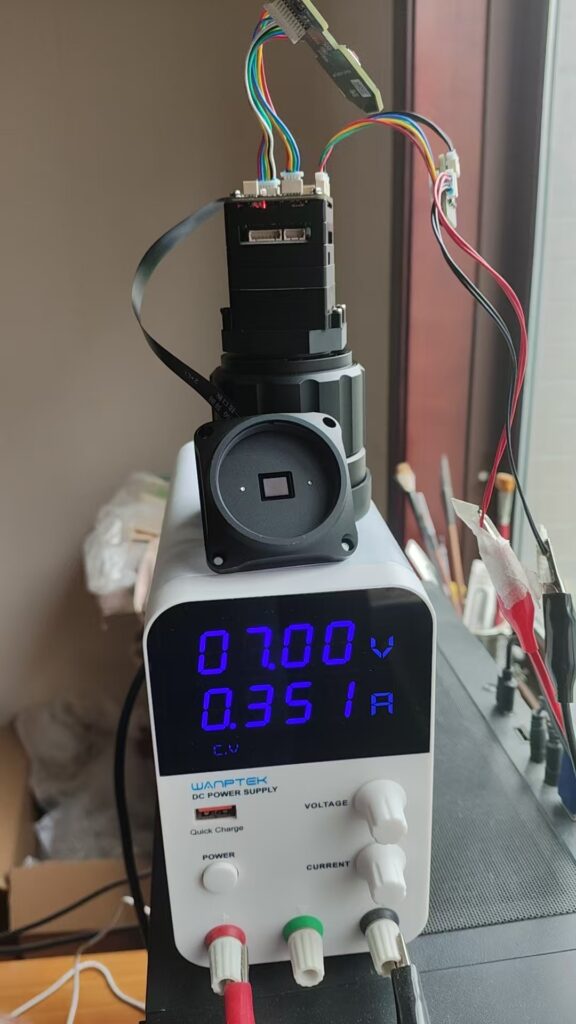
When testing the power consumption of various thermal scope models, we found that most 384×288 resolution thermal cores consume about 1.8W, while most 640×512 resolution thermal cores consume about 2.2W. The average voltage of an 18650 battery is U=3.7V. Two 3000mAh 18650 lithium batteries can support a 640 thermal scope for approximately 8 hours, while a 384 resolution thermal scope can run for more than 10 hours.
What factors affect battery life?
- At lower temperatures, lithium battery capacity is greatly reduced. At 0°C, capacity is about 75% of room temperature capacity; at -10°C, it drops to about 55%; at -20°C, it reaches only about 40% of the rated capacity. This is why when we hunt in the early morning hours of winter, even with two batteries, a thermal scope may only work for 4 to 5 hours.
- More complex temperature changes cause thermal scopes to perform calibration more frequently. Sometimes, the smaller the temperature difference in the background, the weaker the signal reaching the infrared detector, and the more noise there is. To reduce noise, the thermal scope performs more calculations and processing. These factors increase power consumption and shorten battery life.
- Frequent use of the laser rangefinder and ballistic calculator requires a large amount of power to emit the laser and compute impact point parameters. This is one of the largest power demands among all UI functions.
- Electronic compass. Today’s thermal scopes commonly come with a six-axis electronic compass (gyroscope). The electronic compass operates continuously, and turning it on increases overall power consumption by about 0.2 to 0.3W.
- Brighter LED display. For a display with the same resolution, power consumption rises and falls with brightness. We do not recommend that shooters always keep the brightness at maximum when using a thermal scope. On one hand, it increases power consumption; on the other hand, after the user’s eyes leave the screen, it takes longer to readapt to the ambient darkness.
Suggestions to extend your battery life of thermal scope: use external power supply devices like EPS-A1 rifle mounted battery compartment can effectively extend your thermal scope running time by 4~6hours!