
More Than Manufacturing: The Novelty Point Optics OEM/ODM Partnership Approach |NP-Optics Guide

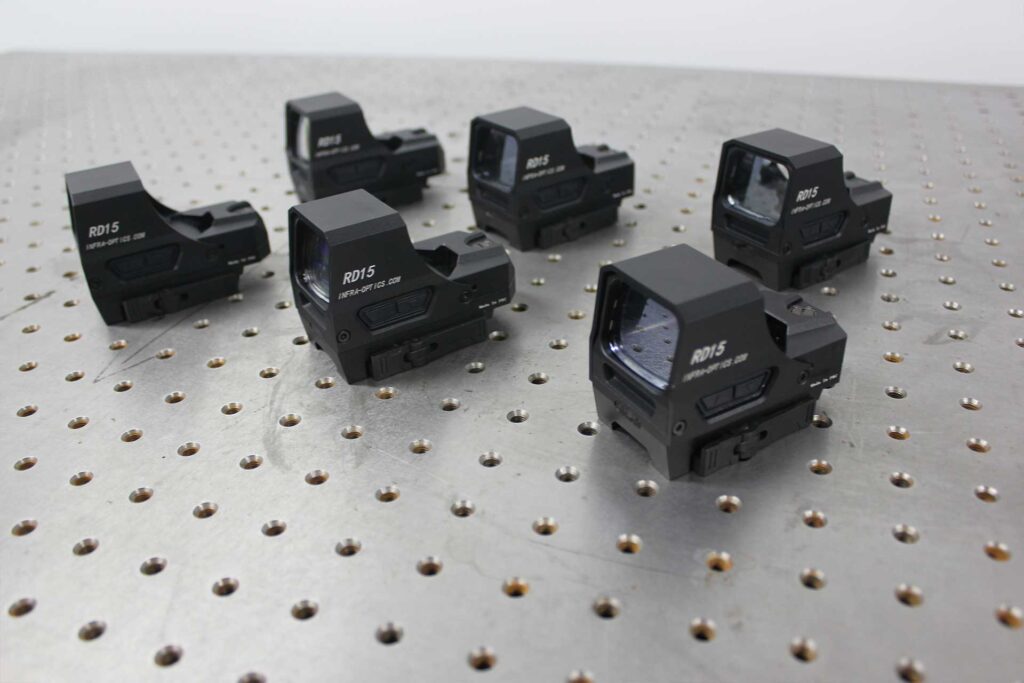
As a specialized manufacturer of hunting optics, Novelty Point Optics actively collaborates with global sight brands through professional OEM and ODM services.

Our core strength is clear: delivering reliable, high-performance thermal scopes at highly competitive prices. We believe the best partnerships are built on playing to each self strengths – we focus on what we do best: R&D and scalable manufacturing. Our partners handle market development, brand building, and customer relationships, while we provide full pricing and service support.

End-to-End OEM/ODM Services from NPO

We cover every stage of product development: product positioning, industrial design, mold tooling, trial production, custom UI, and final packaging. Our services span:

  • Thermal scopes
  • Red dot sights
  • Night vision products

To help you understand our collaboration model, here is a step-by-step walkthrough using a thermal scope co-development example.

Step 1: Product Positioning (1-2 weeks)
Based on your requirements, we define the product across five dimensions: cost, core specifications, ID features, special function, and production timeline. This phase ensures both sides share a clear target.

Step 2: Concept Design & Comparison (Free of Charge)
Once the positioning is approved, we typically provide two design options for function and performance comparison. NPO charges no fees at this stage, demonstrating our commitment to genuine partnership.

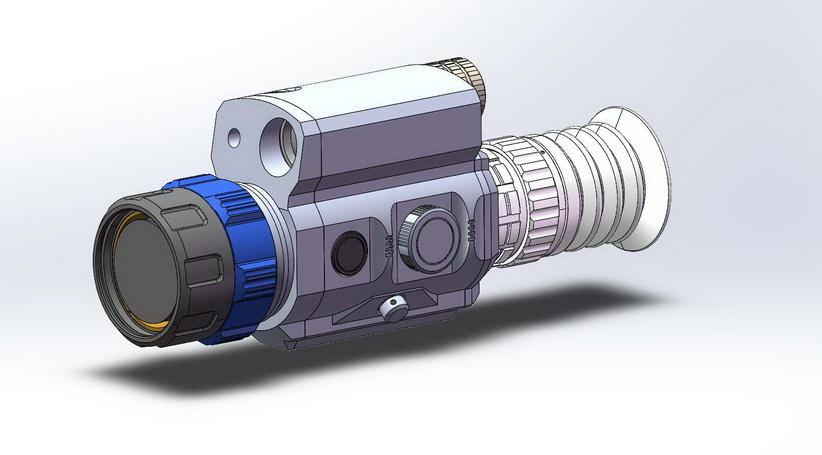
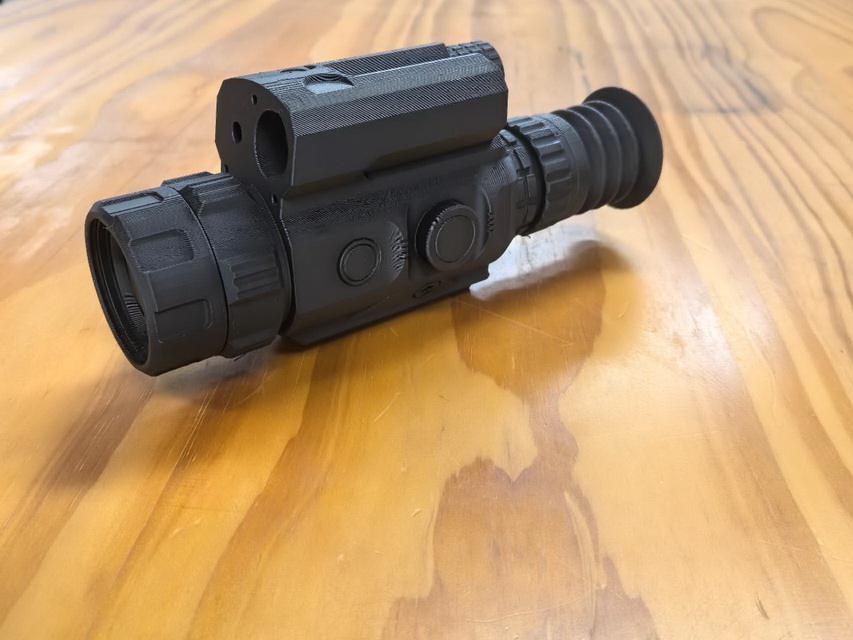
Custom design for thermal scope OEM client

Step 3: Detailing & Engineering Validation
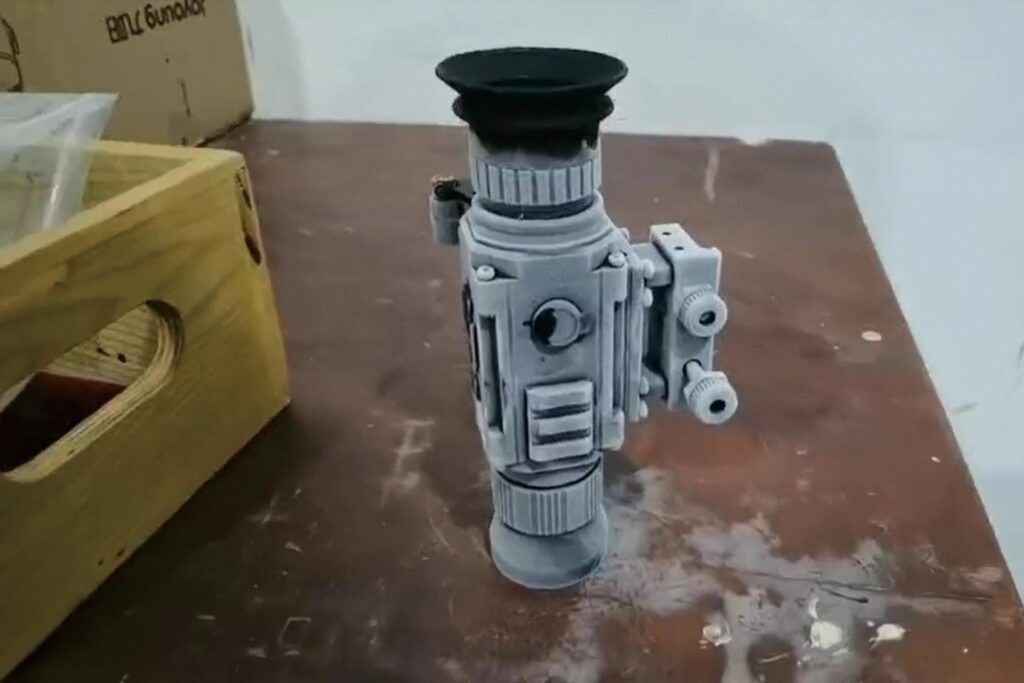
After you select a design, we refine the details. We use 3D printing to produce appearance mockups for visual and ergonomic evaluation. Separately, we build functional engineering prototypes using 3D-printed housings to demonstrate image quality, response speed, operational features, and core parameters. You can test these prototypes hands-on. Once ID and function are confirmed, we move to the most critical phase: mold tooling.

we use 3D printing technology to make model of thermal scope design

Step 4: Mold Tooling & Sample Production (3-4 weeks)
In this phase, we invoice for design, tooling, and sample costs. Tooling fees are approximately $10,000 USD, for which you receive about 10 complete structural housing sets. We then agree on sample pricing and future mass-production pricing. After you pay for the 10 samples, we begin tooling – typically a 3-4 week process.

Step 5: Prototype Assembly & Live-Fire Testing (4-6 weeks)
Once the housings are ready, we assemble approximately 10 prototypes. These undergo extensive live-fire testing, followed by minor revisions based on test results, leading to final design freeze.

Step 6: First Order & Minimum Order Quantity (MOQ)
After you approve the final prototypes, we negotiate the first production order. Our OEM/ODM first order MOQ is 100 units. This balances production cost efficiency without imposing excessive financial pressure. In contrast, some manufacturers require MOQs above 400 units, which often kills promising products before they launch.

Our Commitment: Unique Products, Strict Confidentiality

All products developed through our OEM/ODM partnerships are covered by agreements guaranteeing product uniqueness for each client. We treat commercial confidentiality as our highest priority. Throughout your cooperation with Novelty Point Optics, we steadfastly protect your business interests.

Whether you are a startup or an established brand, if you have custom requirements for thermal, red dot, or night vision products, we look forward to starting a mutually beneficial partnership with you.

True Shot Value Is the Key for a Thermal Scope to Hold Zero in Recoil Tests and Real Shots | NP-Optics Guide

Among all firearm-mounted electronic devices, recoil is the single greatest external factor affecting product lifespan and aiming precision. For a thermal riflescope, shock resistance is particularly critical. Designers and engineers optimize every component—the housing, internal brackets, germanium lens protection, and detector packaging—to ensure accuracy and reliability across various firearm platforms. The culmination of all these efforts is our impact resistance testing.


At Novelty Point Optics, we go beyond assigning a simple impact force value to our products. We employ a more scientific and precise approach: testing by fully simulating real firearm recoil.


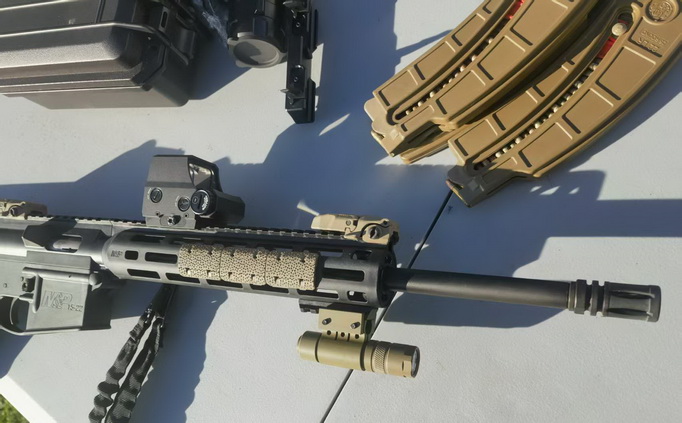
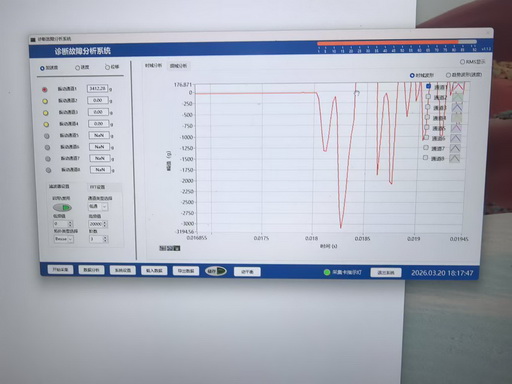
Due to China’s strict firearm regulations, conducting live-fire tests locally is challenging. To overcome this, our General Manager, Mr. Harry, has traveled multiple times annually to the United States since 2024 to conduct live-fire testing on mainstream rifle platforms. During these sessions, he uses vibration sensors to capture complete recoil data—not just peak G-force, but the full waveform, including amplitude, duration, and temporal characteristics of the recoil event.


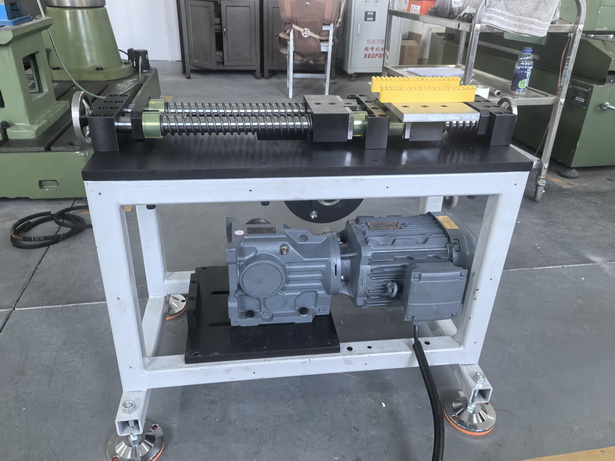
These valuable datasets are brought back to China to calibrate our custom-built vibration test rigs. By accurately reproducing the recoil waveforms captured in the field, we can validate the durability of our thermal scopes, red dot sights, and external battery packs under realistic conditions.


We believe superior products emerge from meticulous attention to every detail. From waterproofing to shock absorption, from material selection to structural design, NPO’s relentless optimization across all dimensions ensures that whether in the field, on a mission, or on patrol, our thermal imaging scopes deliver the confidence and reliability shooters demand. Because true reliability isn’t a single number from a lab—it’s holding zero, shot after shot, against the full force of real recoil.

recoil test platform
_cuva
full shock wave diagram

The reason why NPO Insists on Third-Party IP68 certification | NP-Optics Guide

Modern firearms and optics are undergoing a profound transformation—becoming more electronic, networked, and intelligent. An increasing number of devices are now integrated onto rifle platforms, forming comprehensive, powerful systems. These typically include:


• Thermal scopes
• Digital night vision scopes
• Red dot sights
• Ballistic computers
• Weapon lights
• Laser aiming modules
• External power supplies


Unlike traditional optical sights, these electronic devices must withstand more than just vibration and extreme temperatures. They face an even tougher challenge: IP68 ingress protection rating.


What is IP68? IP68 stands for “Ingress Protection 68,” a standard established by the International Electrotechnical Commission (IEC). The two digits signify:


• First Digit (Dust Protection, 0-6): 6 is the highest level, meaning totally dust-tight. Dust cannot enter the device or affect its operation.
• Second Digit (Water Protection, 0-9): 8 is among the highest common ratings for consumer electronics, meaning the device can be continuously submerged in over 1 meter of water without damage.

In simple terms, IP68 means: Dust cannot enter; water cannot penetrate.

At Novelty Point Optics, every electronic device we manufacture—whether it’s a thermal riflescope, a red dot sight, or the EPS-A1 external power supply—undergoes rigorous IP68 testing. But our approach differs from many others. In China, numerous manufacturers use in-house testing platforms to conduct their own experiments, then simply declare their products IP68 compliant. We do not take this path. We choose a more difficult—but far more trustworthy—route: We submit all our products to renowned third-party testing laboratories. Independent professionals conduct the tests and issue official certification reports. Why?


Because IP68 is not a slogan; it’s a promise. When users take our thermal imaging scopes through rainstorms, across streams, or into damp forests for hours, they need absolute confidence that precision electric board inside remain untouched by moisture, and that critical electronic components won’t fail due to dust. That confidence cannot come from us alone—it must come from an objective, just and authoritative third party.

Reliability is not an ideal laboratory data point; it’s the real-world experience of users in combat zones, hunting fields, and combat scenes. Every NPO device not only passes multiple internal inspections but also carries an IP68 certification from an independent third party. This is our written commitment to customers and our redefinition of “Made in China” quality.


From oxidation protection for infrared detectors, to optical stability at -40°C, to today’s third-party IP68 certification—in places visible and invisible, NPO constantly asks the same question: How can we give users absolute confidence in our products under extreme conditions? The answer lies in these seemingly “excessive” commitments.

How Novelty Point Optics Fights Electronic Oxidation with Vacuum Nitrogen Filling | NP-Optics Guide

Modern hunting sights have fully entered the electronic age. From thermal scopes to red dot sights, the precision electrical components are packed into compact housings. The stability of these components directly determines the accuracy and reliability of your optic.


Unlike traditional optical sights, electronic aiming systems rely on circuit boards, sensors, and processing chips—components rich in metals like copper and tin. These semiconductor materials are not inert like glass; they are constantly under attack from oxygen and moisture in the air. Component oxidation is the silent killer that accelerates performance degradation and shortens the lifespan of modern thermal imaging scopes and red dot sights.


From my first day in this industry four years ago, one of my most critical missions has been fighting an invisible enemy: humidity and air. Protecting precision electric boards, sensors, and processing chips—slowing their oxidation—is essential to ensuring every NPO product performs reliably in demanding hunting environments.


At Novelty Point Optics, we’ve developed a comprehensive system to combat electronic oxidation. Our most powerful weapon is the vacuum nitrogen filling machine, which is an “Inert Shield” for Your Optics.

This process is the final step before every NPO product leaves our facility—and it’s perhaps the most telling example of our commitment to quality. Here’s how it works:

Preparation: The small vent screw on the product’s base is opened.


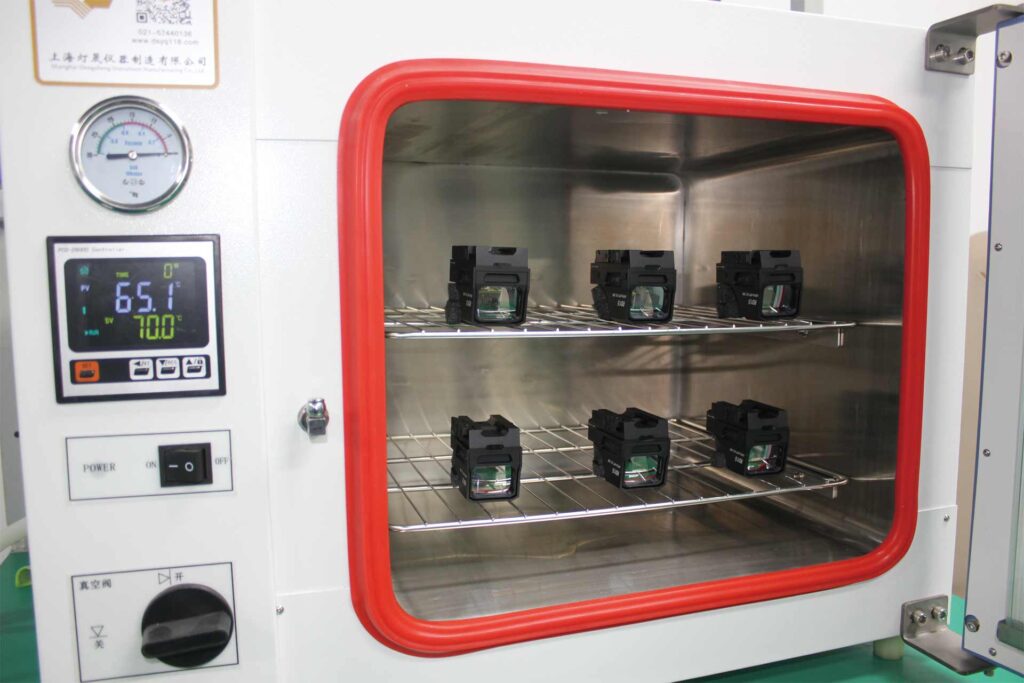
Vacuum & Drying: Units are inverted and placed in the vacuum chamber tray. The door seals, and the vacuum cycle begins, extracting all air from the chamber and from inside every optic. Simultaneously, the chamber automatically heats to 65°C/145°F, drying each unit and removing all residual moisture.


Nitrogen Infusion: Once target vacuum pressure, temperature, and time are reached, the system opens a solenoid valve, flooding the chamber and every optic with high-purity nitrogen.


Permanent Sealing: The chamber opens. Because pure nitrogen is heavier than air, it remains inside the inverted optics. We quickly seal the vent hole with a special srew and apply silicone for secondary protection, locking the nitrogen inside permanently.

This process creates an inert gas environment for the precision electric components inside every NPO thermal riflescope and red dot sight. Deprived of oxygen and moisture, oxidation is dramatically slowed, extending product lifespan and enhancing resistance to harsh environments.


Behind the high performance you see is Novelty Point Optics’ unwavering commitment to our customers—a humble pursuing of product quality achieved through complex, rigorous processes. Vacuum nitrogen filling is just one of our “invisible efforts,” but it protects something vital: your absolute confidence with every trigger pull in the dark.

nitrogen filling for red dot sight
Frog15 red dot sight after filling with nitrogen

How NPO Thermal Scopes Maintain Precision in Extreme Cold | NP-Optics Guide

At the heart of every NPO thermal riflescope lies an uncooled VOx (Vanadium Oxide) infrared detector. While this material delivers exceptional thermal sensitivity, it also presents a formidable challenge in the world’s coldest hunting grounds—North America, Northern Europe, and Russia—where winter temperatures can plunge to -40°C. When the mercury drops this low, the detector undergoes significant physical changes:

Responsivity declining: The sensor’s sensitivity to infrared signals diminishes.

Signal-to-Noise Shift: The balance between useful signal and background noise becomes distorted.

Non-uniformity increasing: Fixed pattern noise emerges, degrading image quality.

Without active compensation, these effects would render thermal imaging useless—overall brightness and contrast would be severely compromised, directly impacting aiming accuracy when it matters most. Our solution for the latest generation rifle thermal scopes are Embedded Temperature Sensors & Adaptive Correction Algorithms. A precision temperature sensor continuously monitors internal conditions. The system dynamically calls upon optimized calibration tables or performs real-time background calibration to compensate for detector and optical drift. The result: stable, clear imagery regardless of ambient temperature.

But the detector isn’t the only component affected by extreme cold. Every optical element and structural component undergoes physical deformation due to thermal expansion and contraction—changes that threaten optical precision. Novelty Point Optics addresses this through deliberate, preemptive design:

Reinforced Structures: Critical stress points are reinforced and ribbed.

Potting Fixation: Key components are secured with industrial adhesives to prevent warpage.

Material Selection: Cold-optimized material combinations are chosen from the start.

These measures significantly minimize boresight shift in extreme temperatures, ensuring that when you aim, you hit.

Every NPO thermal scope must survive one ultimate challenge before leaving our facility. As shown below, we power on each fully assembled unit, place it in a professional thermal chamber, and lower the temperature to -40°C. Inside this frozen environment, we rigorously test optical boresight retention.

Any unit that fails this test is immediately disassembled, inspected, and reassembled until it meets our exacting standards. This isn’t just quality control—it’s a promise to every user who trusts NPO in the field.

From the -40°C wilderness to the precision of your next shot, NPO technology stands with you in the dark.

NPO thermal scope -40 temperature test

The Weight vs. Strength Lesson: Evolving Our Thermal Scopes from Aluminum to Magnesium Alloy | NP-Optics Guide

In 2025, our predecessor Infra-optics executed a major overhaul of the FMR-series thermal scopes. The most significant change was a material revolution: replacing the series’ primary structural material from 6-series aluminum alloy to magnesium alloy.

The result was immediately impressive: the scopes’ weight dropped from 850 grams to 700 grams—a successful 18% reduction. The entire team celebrated this leap in lightweight performance.

However, real-world field conditions are the ultimate test. Starting around August 2025, we received a series of warranty claims, primarily from the Canadian market, concerning the newly upgraded FMR335L and FMR645L models. The issue was specific: broken battery door latches and mounting lugs.

An urgent investigation was launched. Engineering analysis pinpointed a critical oversight: when we switched from aluminum to magnesium, we retained the original latch design. Magnesium is lighter, but it also has significantly lower stiffness and fatigue strength than aluminum. The original design couldn’t compensate for this change in material properties, turning the latch into a stress-concentration point under repeated use and recoil.

We acted swiftly, supplying reinforced replacement latch components to our global network. But the true value of this episode was the profound lesson it taught us:

  1. Material substitution is not a direct swap. Magnesium is about 35% lighter than aluminum, but its structural strength is lower. Weight reduction is its primary advantage, not increased durability.
  2. Application requires a “strength-first” rule. NP-Optics now reserves magnesium alloy primarily for products like handheld thermal monoculars, where extreme lightweight is critical and absolute peak strength is less paramount.
  3. Design must be tailored to the new material. For high-performance lines where magnesium is essential—like the new Rhino series thermal scopes—we have completely re-engineered critical stress points like the battery door latch and lugs. We’ve incorporated reinforced geometry and optimized load paths to ensure durability meets or exceeds that of our past designs.

Every technological step forward brings new understanding. From the FMR to the Rhino series, what we learned from our “lightweighting success” was something even more valuable: a deepened respect for unwavering reliability. It’s a lesson built into every product we deliver.

Pixel-Perfect Thermal Scopes: Our Multispectral Calibration Secret | NP-Optics Guide

At NP-Optics, our commitment is to build high-performance, supremely reliable thermal imaging scopes. For any aiming system, absolute precision is non-negotiable. In the world of daytime optics, the optical collimator is the universal tool for ensuring this. Yet, a fundamental barrier exists for thermal scopes: infrared light cannot pass through a standard collimator’s objective lens, rendering this essential QA process useless.

Confronting this industry-wide challenge head-on, NP-Optics embarked on an in-house R&D mission. The result is our proprietary Multispectral Boresight Collimator. This advanced instrument can simultaneously process infrared, visible, and laser wavelengths, allowing it to precisely measure the alignment—or misalignment—between the thermal sensor core, the display reticle, and the objective lens.

How This Calibration System Defines Our Manufacturing:

  1. Assembly-Level Alignment: After initial assembly of the core, eyepiece, lens, and OLED display, the unit is placed in the collimator. Components are then minutely adjusted and secured, establishing a foundation of perfect alignment before final assembly.
  2. Final Inspection Verification: Post-assembly, every scope must return to the collimator for final QA. We enforce a stringent 15-pixel tolerance standard, ensuring the reticle center deviates from the true optical axis by no more than this limit.
  3. Reliability Re-verification: Qualified units then undergo a brutal shock test: 1000 cycles at 2Hz with 700G acceleration. After this simulation of extreme recoil and impact, the scope is tested a third time. It passes only if its boresight remains steadfastly within the 15-pixel tolerance.

Extended Precision: This system also calibrates integrated laser rangefinders, ensuring the laser dot coincides exactly with the on-screen aiming point, creating a unified “range-and-aim” system.

Every NP-Optics optical device passes through this multispectral calibration gauntlet. We believe exceptional thermal image quality is the starting point. Absolute aiming reliability, built on millimeter and pixel-level precision, is the ultimate promise of a professional tool. This is the accuracy we build into every scope.

The story of NPO Top mount picatinny rail | NP-Optics Guide

In 2023, a deep collaboration with professional users in Eastern Europe taught us a pivotal lesson in practical design. They were using our first-generation FMR335 thermal imaging scope and came back with a specific, hardware-focused request: “We need a Picatinny rail on top.”

Initially, we wondered why. The answer revealed a critical need for tactical flexibility. In high-intensity use, constantly swapping between a daytime optic and a thermal scope is inefficient and can compromise zero. These users needed a permanent, unified weapon platform that could adapt in an instant.

Their logic was brilliant in its simplicity:

  • Mount a red dot sight on the newly added top Picatinny rail.
  • Leave the thermal scope on the main rail underneath.
  • Daylight/CQB: Use the always-ready, zero-power red dot for speed.
  • Darkness/Concealment: Flip on the thermal scope for imaging.

This configuration eliminates the “dead scope” dilemma. Imagine a coyote appears at 40 yards in broad daylight. Your rifle is equipped with this hybrid system. You raise it and the red dot is instantly live—no waiting for a thermal scope to boot. You take the shot. The top-mounted Picatinny rail just turned a specialized night-vision tool into a 24/7 ready rifle.

That user request directly shaped our product line. We now design key models with an integrated top Picatinny rail, recognizing it’s not just an accessory point but the cornerstone of a dual-purpose sighting system. It’s a testament to building what users truly need, not just what we think they want.

Explore NP-Optics thermal scopes built with user-inspired features, designed for all hunting situation adaptability.

Beyond the Battery is how we solving the thermal scope power crisis | NP-Optics Guide

A hard lesson echoed by professionals across modern battlefields, from Ukraine to global training grounds: a thermal scope without power is a useless piece of equipment. When the battery dies, your tactical advantage vanishes in the dark.

Even high-end military thermal scopes, typically powered by dual 18650 batteries (up to 8000mAh), struggle to exceed 8 hours of continuous use in freezing conditions. This critical limitation forces operators into vulnerable battery-swapping routines mid-operation. The reality is stark: a dead thermal scope is as good as having no scope at all.

At NP-Optics, we’ve made it our mission to break this fundamental constraint. We approach the power challenge not by merely adding bigger batteries, but through a holistic “Conserve & Augment” strategy across four key system levels:

  1. Source Efficiency: Optimized Core & Algorithms
    The infrared detector core is a major power consumer. Our proprietary high-efficiency image processing algorithms maintain exceptional image clarity while drastically reducing the computational power required, cutting energy consumption at the source.
  2. Display Revolution: Energy-Saving OLED Across the Line
    The display is another critical drain. NP-Optics has completed a full product line transition to high-performance, low-power OLED displays. These screens offer superior contrast and visibility while consuming significantly less power than traditional alternatives.
  3. External Endurance: The EPS-A1 External Battery System
    For a quantum leap in runtime, we engineered the EPS-A1 External Battery Pack. This innovative accessory securely attaches to your weapon’s Picatinny rail via a screw-clamp mount. It houses an additional set of 18650 batteries, acting as a hot-swappable backup or a parallel power source. It can even be charged in the field via a power bank, enabling “continuous use” scenarios that can more than double your operational time.
  4. Brain Power: Ultra-Efficient Hisilicon Processor
    The “brain” of our latest-generation devices has been upgraded to the HiSilicon 3356 processor. Renowned for its industry-leading power efficiency, this chip delivers formidable processing power with minimal energy draw, optimizing overall system power management.

This four-pillar approach represents a systematic war on power anxiety. Our goal is not just incremental improvement but to provide users with the confidence to operate in the most demanding conditions, free from the constant worry of a dying battery.

Reliable technology builds trust. At NP-Optics, we are committed to R&D that ensures our thermal imaging products remain your most persistent and dependable eyes in the dark.

Germanium vs. Chalcogenide: The Evolution of Infrared Optics | NP-Optics Guide

The foundation of modern thermal imaging technology lies in the development and application of materials sensitive to infrared radiation. Every object above absolute zero emits electromagnetic energy. Within common ambient temperatures, this emission peaks in the infrared spectrum. Specialized materials that can capture and convert this invisible signal allow us to “see” heat, forming the core of every thermal camerathermal rifle scope, and infrared monocular.

Among key infrared optical materials, Germanium (Ge) and Chalcogenide Glass are two prevalent choices, each with distinct trade-offs.

  • Chalcogenide Glass offers a significant cost advantage, typically around one-third the production cost of germanium, making it ideal for cost-effective solutions.
  • Germanium Glass provides superior stability, hardness, and mechanical strength. For large-aperture thermal scopes that must endure high recoil and harsh environments, germanium is often the unmatched material for ensuring long-term optical precision and reliability.

A critical supply chain reality now impacts the global infrared industry: Germanium is a strategic metal rarer than gold. With limited global reserves, China is the primary supplier of high-purity germanium. To maintain global strategic stability, Chinese authorities have implemented export controls on critical dual-use items, including germanium. This has, in effect, reduced the flow of germanium for military-grade infrared equipment and increased costs for germanium optics worldwide.

In response to this global supply chain evolution, NP-Optics prioritizes long-term product reliability and transparent responsibility to our customers. After careful evaluation, we announce a strategic transition plan:

Effective January 2026, we will initiate a phased transition in our infrared optical materials:

  1. For lenses 35mm and below: Upon depletion of existing inventories (180 sets of 35mm & 45mm Ge lenses), we will transition fully to high-performance Chalcogenide Glass. This manages cost while ensuring performance meets the needs of mainstream commercial products.
  2. For large-aperture lenses 45mm and above: We will gradually reduce germanium use while dedicating R&D resources to pioneer new, high-performance alternative optical materials, securing the future of our premium product lines.

We understand that material changes concern our users’ trust. This decision is not merely cost-driven but based on a comprehensive analysis of global trends, supply security, and product lifecycle. We believe thermal imaging technology is always advancing. Current challenges are driving the industry toward more diverse, innovative, and sustainable material solutions.

We communicate this plan proactively, upholding our “user-first” commitment. NP-Optics pledges that core performance and reliability standards will not be compromised during this transition. We invite you to join us as we move toward a future with even more capable thermal imaging products.

Please enter your info and let's start chatting!