

Thermal Red Dot Sight: How NPO Created a Fusion Optic | NP-Optics Story

Last winter, I was discussing the future of hunting optics and tactical equipment with a friend when he shared an idea that stayed with me.

He said that modern optical equipment is becoming increasingly advanced, but one simple problem is often overlooked:

What happens when electronic equipment loses power?

A highly capable optic can become useless when its battery runs out.

That conversation led us to think about a new possibility:

Could we create a thermal red dot sight that combines the advantages of thermal imaging with the reliability of a traditional reflex sight?

A sight that provides thermal capability when powered, but still works as a normal red dot sight when the battery is depleted.

This idea became the starting point of our fusion optic development.


Why We Started Developing a Thermal Fusion Sight

During our research into real-world applications, we found that electronic optics always face one unavoidable challenge — power dependency.

Thermal imaging systems provide excellent detection capability, especially in low-light environments, but they require continuous power to operate.

When the battery is completely drained, the thermal function disappears.

For many users, losing the entire aiming system because of battery failure is unacceptable.

So we asked ourselves:

Instead of creating another thermal optic that depends completely on electronics, why not combine thermal imaging with a reliable reflex aiming system?

The goal was simple:

Thermal capability when needed. Reliable red dot aiming when power is limited.


How We Combined Thermal Imaging and a Reflex Sight

Our engineering team developed a unique optical solution.

By using a precision reflector system, the thermal display image is projected onto the reflex lens of the red dot sight.
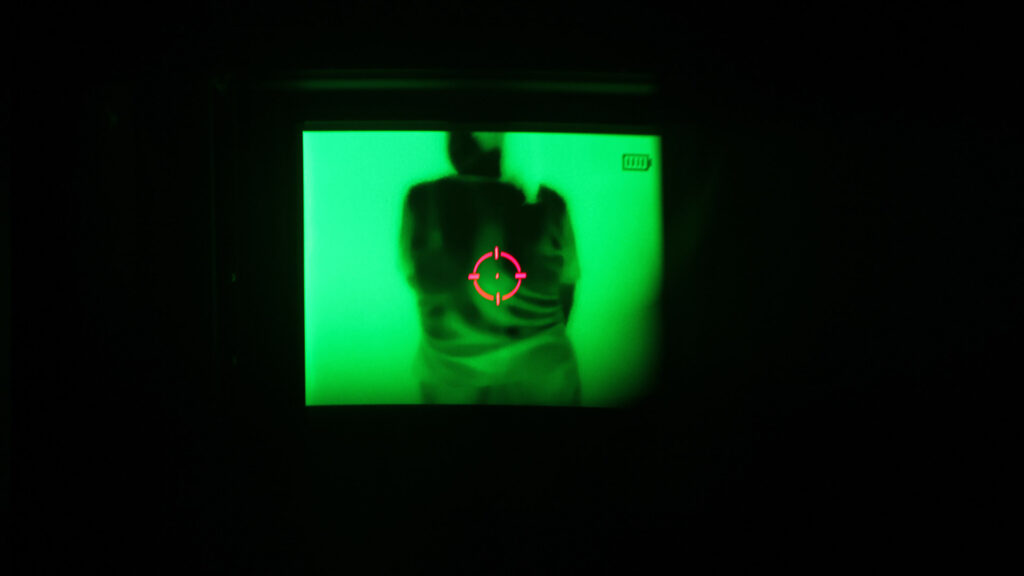
thermal scope and red dot fusion sight

Through careful optical design, machining, and assembly, the thermal imaging system and reflex aiming system were integrated into one compact unit.

The result is a hybrid thermal optic that combines:

  • thermal detection capability;
  • fast reflex aiming;
  • compact size;
  • independent red dot operation.

Battery Design: Thermal Mode and Red Dot Mode

One of the biggest challenges in developing a thermal red dot sight was power management.

The system operates using a single CR123A battery.

In red-dot-only mode:

  • battery life exceeds 2,000 hours.

In full fusion mode:

  • thermal imaging combined with red dot aiming provides approximately 4 hours of continuous heavy use.

When battery power becomes too low to operate the thermal module, the optic can still function as a standalone red dot sight for more than 500 hours.

This design ensures that the optic does not become useless simply because the thermal system loses power.


Compact Design With Practical Performance

For the thermal imaging core, we selected a high-performance 256×192 infrared detector from Iray, combined with a 19mm chalcogenide infrared lens.

This configuration provides an excellent balance between:

  • image quality;
  • size;
  • cost;
  • practical hunting applications.

Within 100 meters, this thermal fusion sight delivers the performance required for fast target identification and engagement.

The entire system is housed in a rugged aluminum alloy body designed for outdoor environments.


From Prototype Development to OEM Production

From the first concept to the initial prototype, the development process took approximately three months.

In February this year, we brought prototype units to several international customers for evaluation.

The response was beyond our expectations.

Many customers were surprised that thermal imaging and reflex aiming could be integrated into such a compact design.

Their feedback helped us further improve:

  • button layout;
  • operating logic;
  • sleep mode;
  • user interface.

After returning to China, our engineering team completed optimization and finalized the product design.


A New OEM Opportunity for Thermal Optics Brands

In May, we received OEM orders from customers in Eastern Europe and sample requests from other markets.
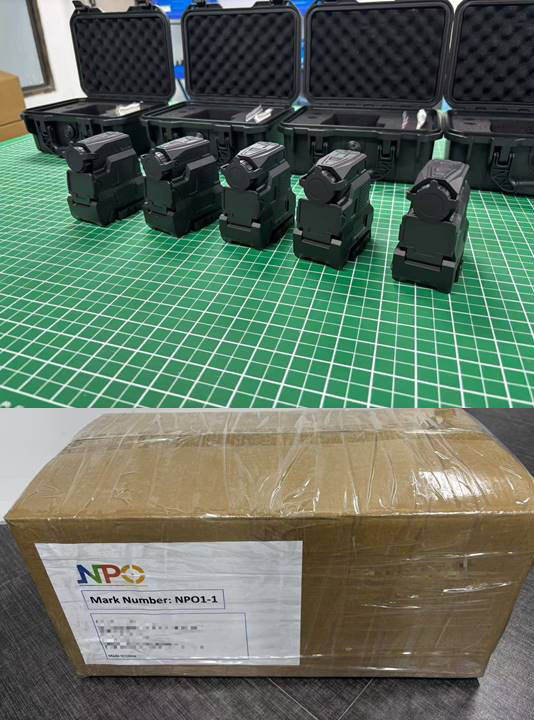
thermal fusion red dot sight ready to be shipped to EU customers

For this product, we provide a flexible OEM manufacturing model, allowing customers to develop products under their own brands.

Our OEM services include:

  • product customization;
  • industrial design adjustment;
  • firmware optimization;
  • packaging customization;
  • production support.

As a thermal optic manufacturer, we believe the best products come from close cooperation between engineers, brands, and end users.


The Future of Thermal Fusion Optics

When we first proposed this idea, we were not sure how the market would respond.

We wondered whether this was simply an interesting engineering concept or whether users truly needed this type of product.

The response answered that question.

Customers from different markets immediately recognized the value of combining thermal imaging with a reliable reflex sight.

This experience confirmed one thing:

Innovation is not always about adding more functions.

Sometimes, it is about solving a simple problem that many people have experienced but nobody has solved.

For us, the thermal red dot sight is not just a new product.

It is a new direction for compact thermal optics.

Explore NPO Thermal Fusion Optic Solutions

Looking for a customized thermal red dot sight for your brand?

Contact NPO for OEM and ODM cooperation.
Request OEM Information

Why Dual Housing Matters in a Holographic Sight: More Weight or More Protection? | NP-Optics Story

Over the years, I have handled hundreds of red dot sights and holographic sights of different designs. Some feature a single housing structure, while others use a dual housing design.

From a technical perspective, we have always known that a dual housing holographic sight provides better protection for the internal optical system. However, understanding the real value of this design requires more than theory — it requires experiencing how the sight performs under extreme impact.

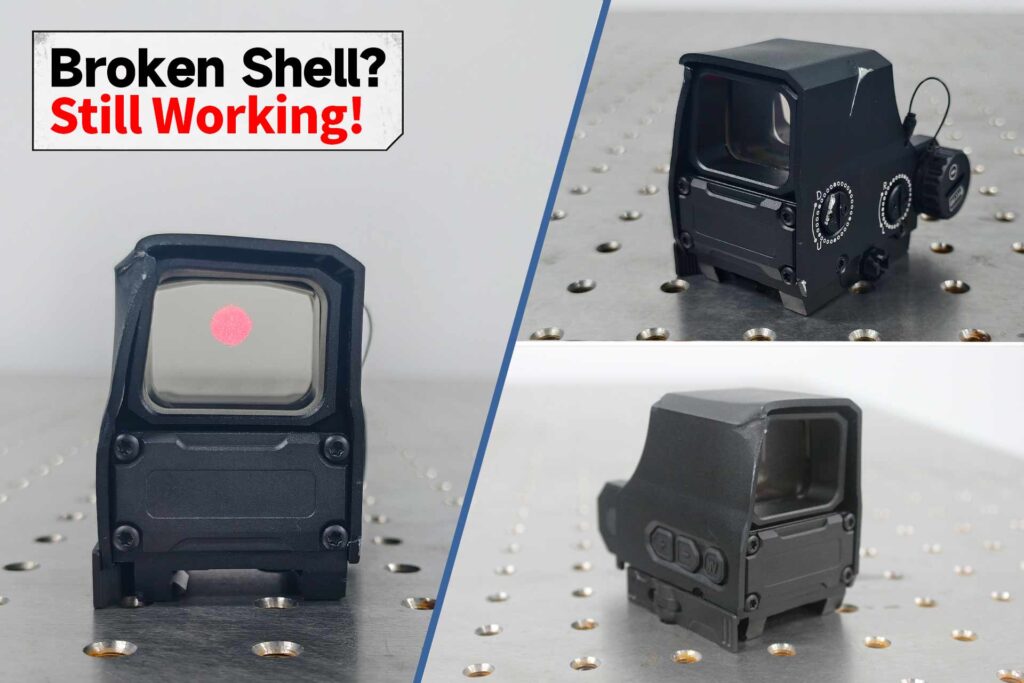
Recently, during a routine shock test at Novelty Point Optics, an unexpected accident allowed me to truly understand why a dual housing structure is not simply extra weight, but a second layer of life protection for a precision optical device.

double housing holographic red dot sight

What Is a Dual Housing Design in a Holographic Sight?

A holographic sight contains several precision components, including the laser emitter, holographic optical element, electronic system, and optical alignment structure.

Unlike a traditional single-housing design, a dual housing holographic sight uses an additional protective outer structure surrounding the internal optical module.

The purpose of this design is not only to increase mechanical strength, but also to isolate the precision optical components from external impact forces.

For shooting optics, maintaining zero retention after shock and recoil is one of the most important performance requirements. Even a small shift in optical alignment can directly affect shooting accuracy.


Why Does Shock Resistance Matter for a Holographic Sight?

A sight mounted on a firearm experiences much more than normal handling conditions.

During shooting, the optic must withstand:

  • repeated recoil forces;
  • accidental drops;
  • impacts during transportation;
  • harsh outdoor environments.

At Novelty Point Optics, every holographic sight leaving our production facility must pass a 1000G shock test on our impact testing platform.

The purpose of this test is simple:

After experiencing extreme impact force, the sight must continue functioning normally and maintain zero retention.

Only products that pass this test can meet our quality standards.


A Real 1000G Shock Test That Changed My Understanding of Dual Housing Design

During each shock test, we mount the holographic sight onto a 3D-printed Picatinny rail fixed on the testing platform.

After hundreds of repeated tests, these 3D-printed rails gradually experience deformation, wear, and loosening due to continuous impact forces.

Then, a few days ago, an unexpected accident happened.

During a shock test of our Penguin15 holographic sight, the mounting rail suddenly loosened. The sight detached from the fixture and was pushed directly into a gap inside the testing machine by the impact hammer.

Under the enormous impact force, the sight was launched more than three meters into the air before falling heavily onto the concrete floor of our workshop.

My first reaction was:

The sight is probably finished.

I immediately checked the impact testing platform first because I was concerned that the sight might have damaged the machine.

Fortunately, the testing platform was completely fine.

Only then did I walk over and pick up the holographic sight.

What I saw surprised me.

The outer housing window was visibly twisted and deformed after the impact. However, the reticle was still operating normally.

The holographic projection system continued working.

We immediately performed a zero retention test.

The result was almost unbelievable:

The sight maintained zero perfectly after the impact.


The True Value of Dual Housing: Protecting the Heart of the Sight

That moment completely changed how I viewed our dual housing design.

Before this accident, dual housing was a technical feature that we explained in product specifications.

After this accident, it became something I personally witnessed.

The dual housing structure had protected the most fragile and critical components inside the sight:

  • the holographic optical system;
  • the laser emitter;
  • the internal alignment structure.

Without this additional protection, the external impact force could have directly affected the internal optical alignment and destroyed the sight’s ability to maintain zero.

This is why durability in a holographic sight is not only about surviving impact.

It is about protecting accuracy.


Is Dual Housing Just Extra Weight?

A common question about dual housing holographic sights is:

“Does the additional structure only make the sight heavier?”

The answer is more complicated.

Yes, a dual housing design requires additional material and increases manufacturing complexity.

However, the added weight provides a significant advantage:

It creates a stronger protective barrier around the precision optical system.

For professional users, hunters, and shooting enthusiasts operating in demanding environments, reliability often matters more than saving a small amount of weight.

A lighter sight that loses zero after impact provides little real value.

A slightly heavier sight that continues working when needed provides confidence.


Why NPO Continues to Use Dual Housing Design

At Novelty Point Optics, we believe optical products should be designed based on real-world use, not only laboratory specifications.

The purpose of engineering is not simply to create lighter products or lower manufacturing costs.

The purpose is to create equipment that performs when users need it most.

The accidental impact test of our Penguin15 holographic sight reminded us of an important principle:

A durable optical sight is not defined by how it looks.

It is defined by whether it continues to perform after experiencing the unexpected.

That is why we will continue using the dual housing structure in our holographic sights.

Because I have seen its value with my own eyes.

It is not extra weight.

It is a second life for the sight.

Explore the NPO Penguin15 Holographic Sight

Designed with a dual housing structure, 1000G shock testing, and reliable zero retention performance for demanding shooting applications.

Learn More →

Get a special deal on Amazon for Penguin15 holographic sight

special sales for P-15 red dot on Amazon

Please enter your info and let's start chatting!